- Client
- Northside Elder Care Network
- Year
- 2024–25
- Role
- Lead designer: research, interaction design, pilot prototype
- Team
- Dr. Alma Reyes, geriatric pharmacist
- June Whitaker, program director
- Two contract engineers
- Mina Okafor, design
The brief
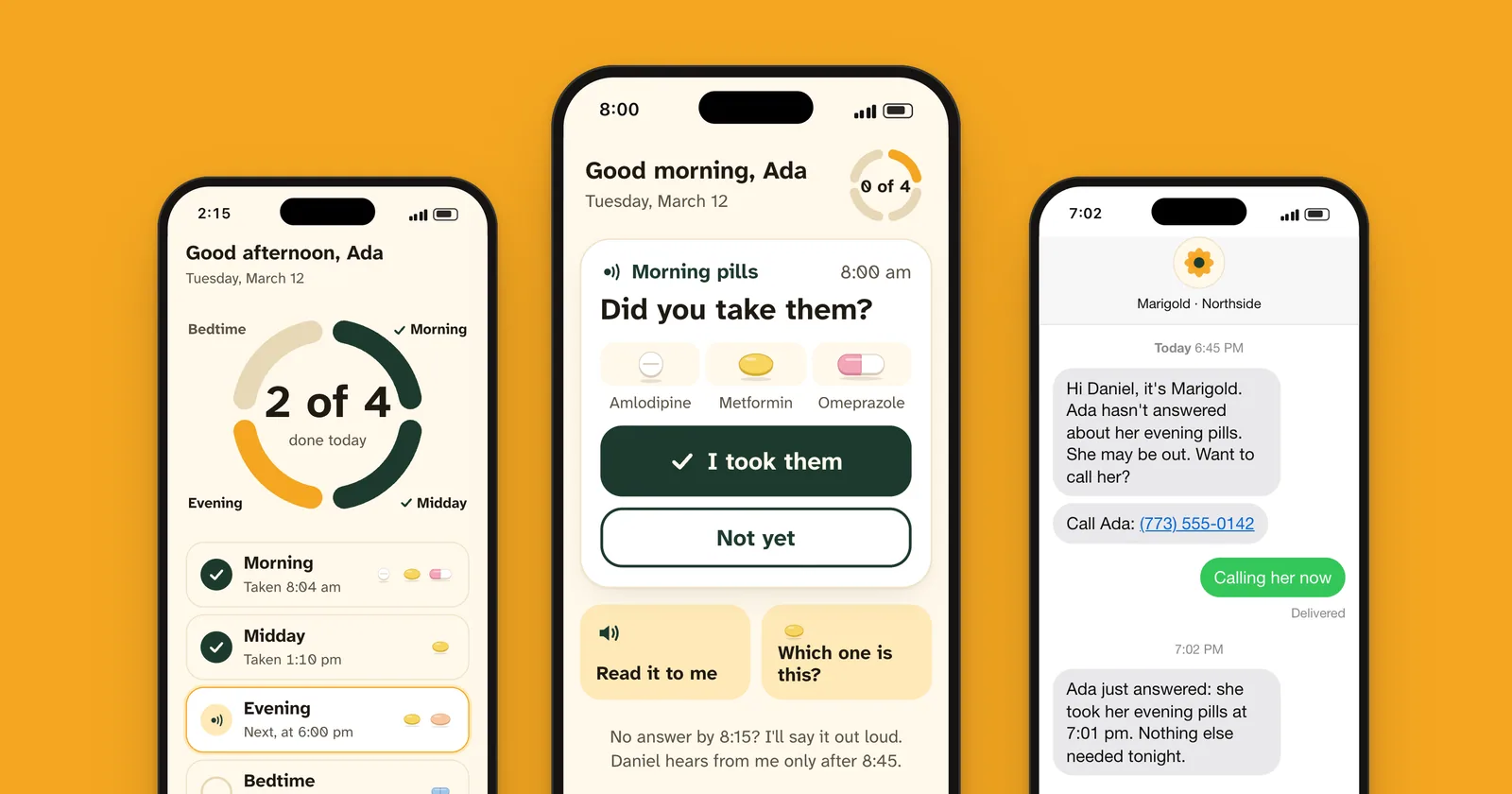
Northside's nurses visit about 2,000 older adults at home in Chicago, and they kept seeing the same thing: people on five or more medications missing doses, or taking them twice because they couldn't remember. The pill-box alarms Northside handed out, and the apps families installed, worked for a week or two and then went quiet. June Whitaker, the program director, gave me a one-line brief: a reminder people are still using after the second week.
The constraint
The people using it are 72 to 94, with a median age of 81. Many have low vision, arthritis or a tremor, and some have mild cognitive impairment, so a nurse or family member does the setup and nobody manages an account or a password. It had to run on donated phones several years old. And no alarms: in our first interviews, nearly everyone had silenced theirs for good.
Decisions
- 1
One question per screen
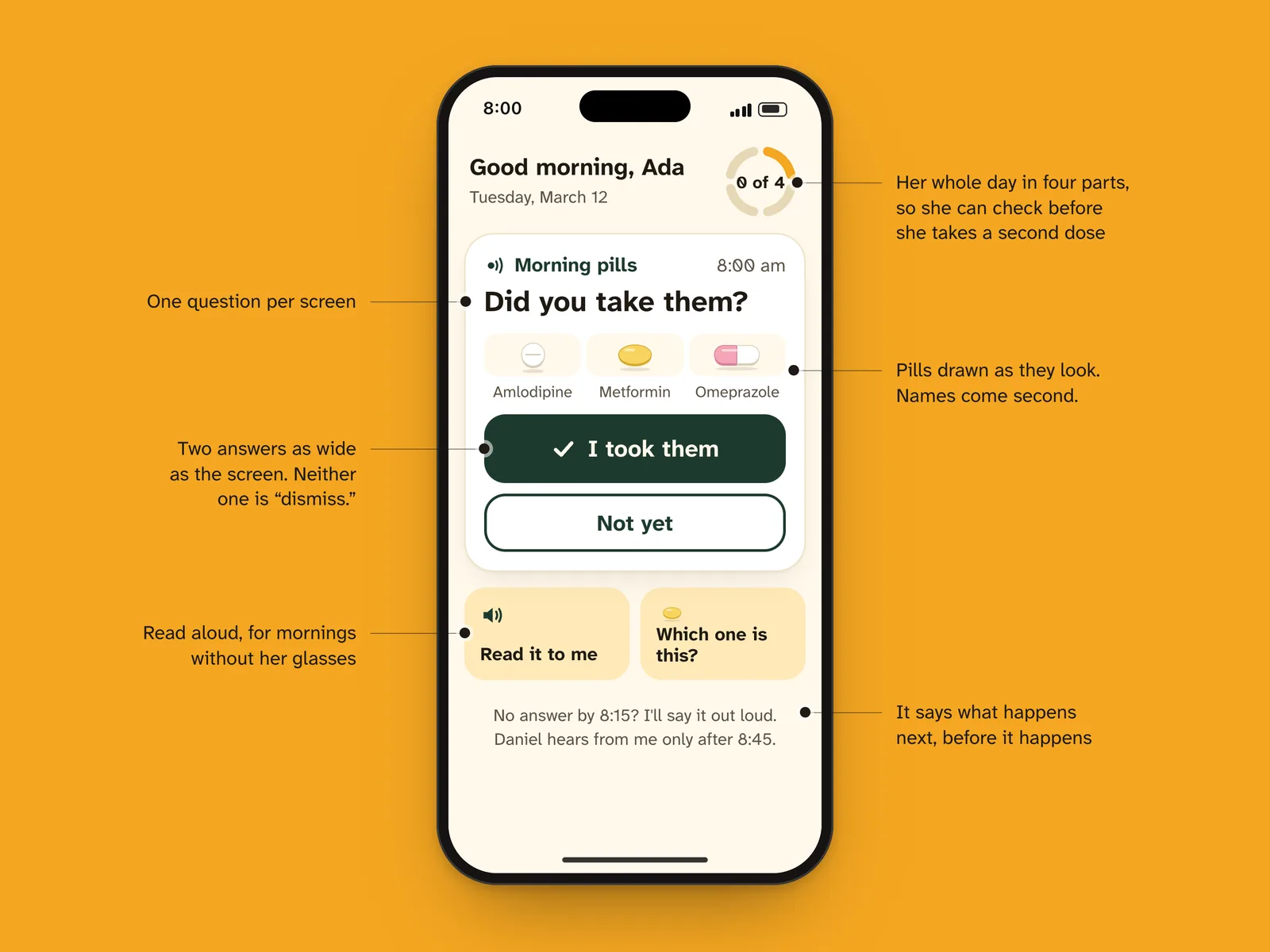
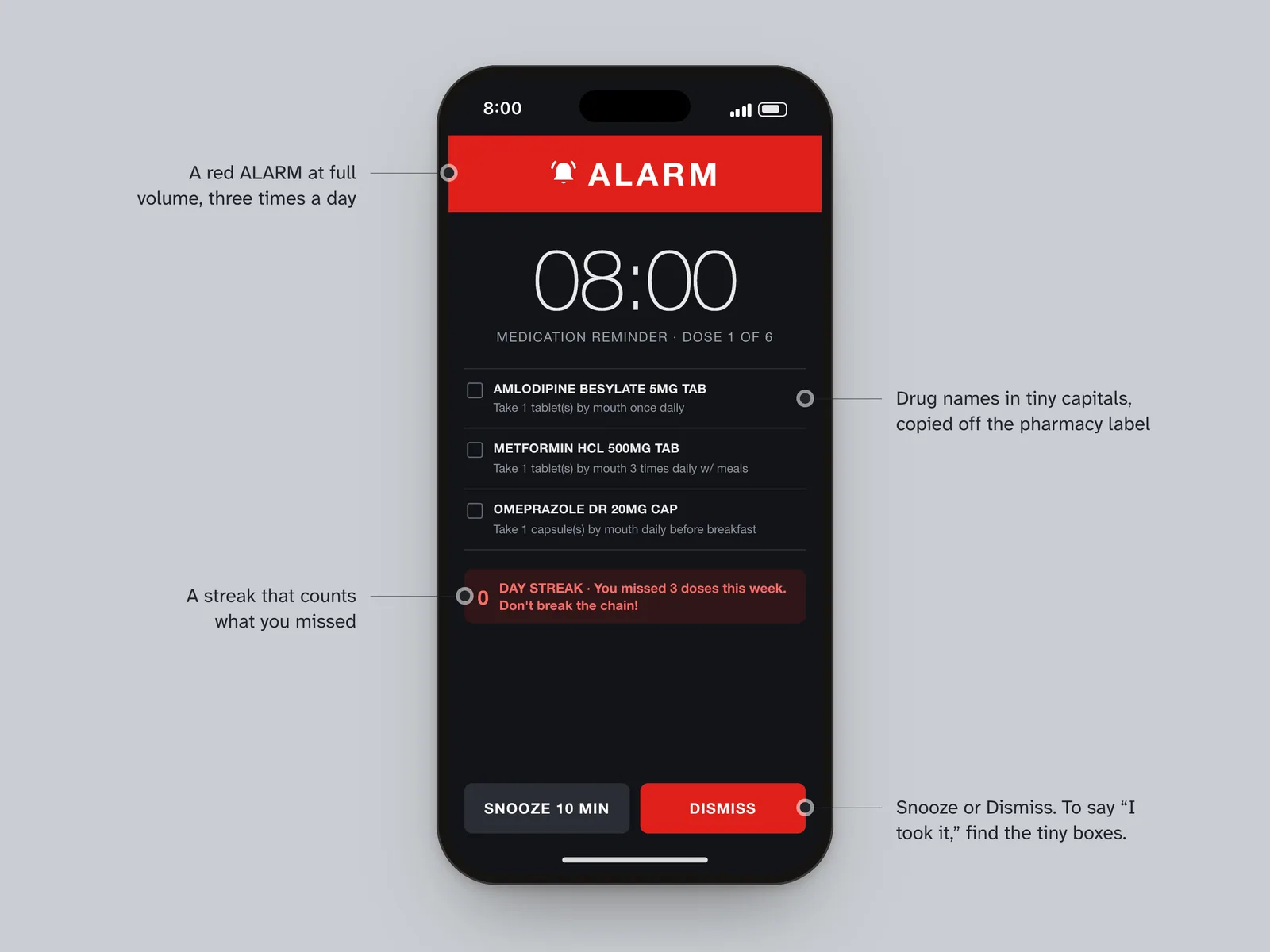
Each reminder is a single question, “Morning pills. Did you take them?”, with two answers as wide as the screen. My first version had a checkbox for every pill, and people with a tremor kept hitting the wrong one. Dr. Reyes agreed that one answer per time of day was accurate enough, and it was far easier to get right.
- 2
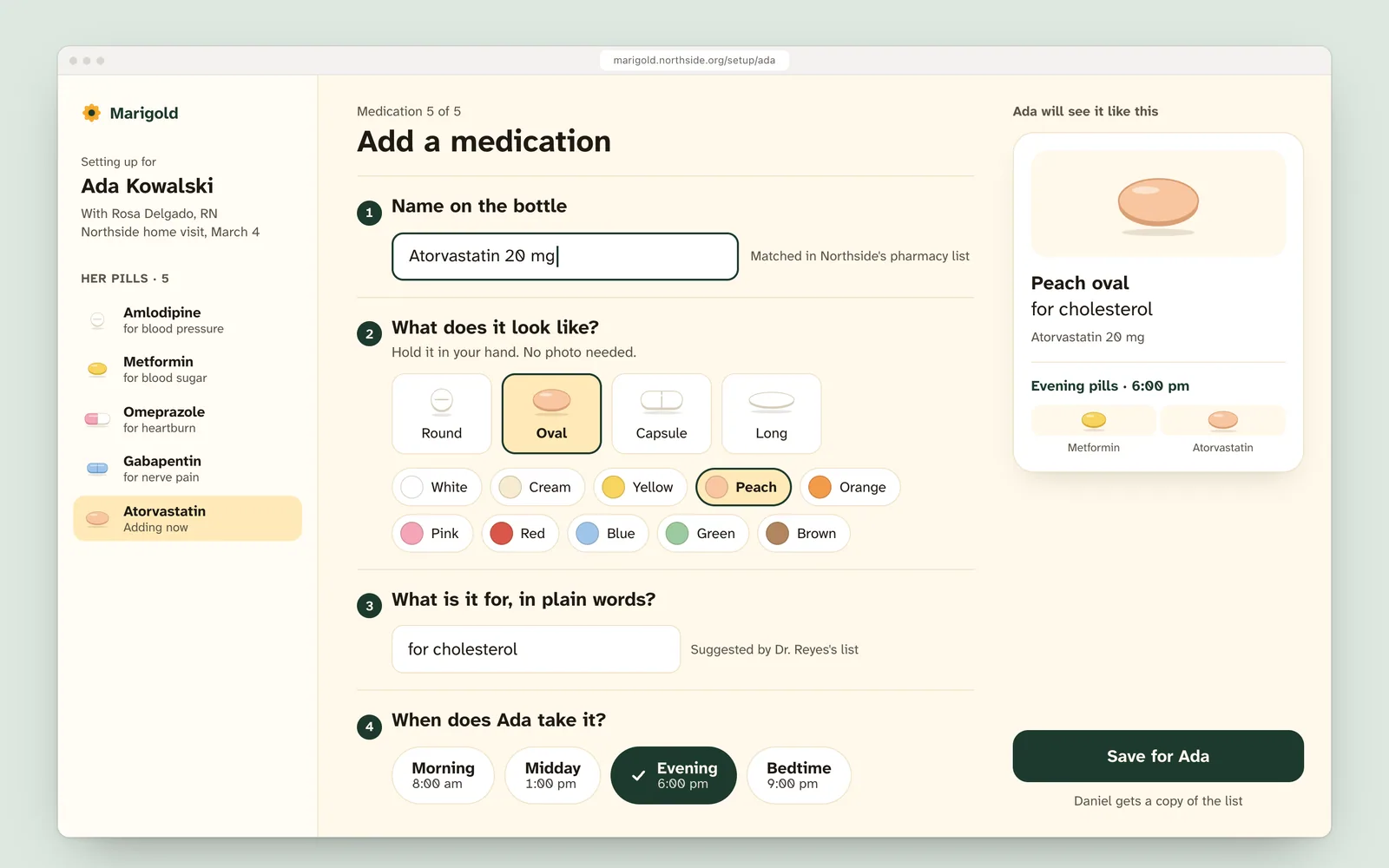
Pills shown as they look
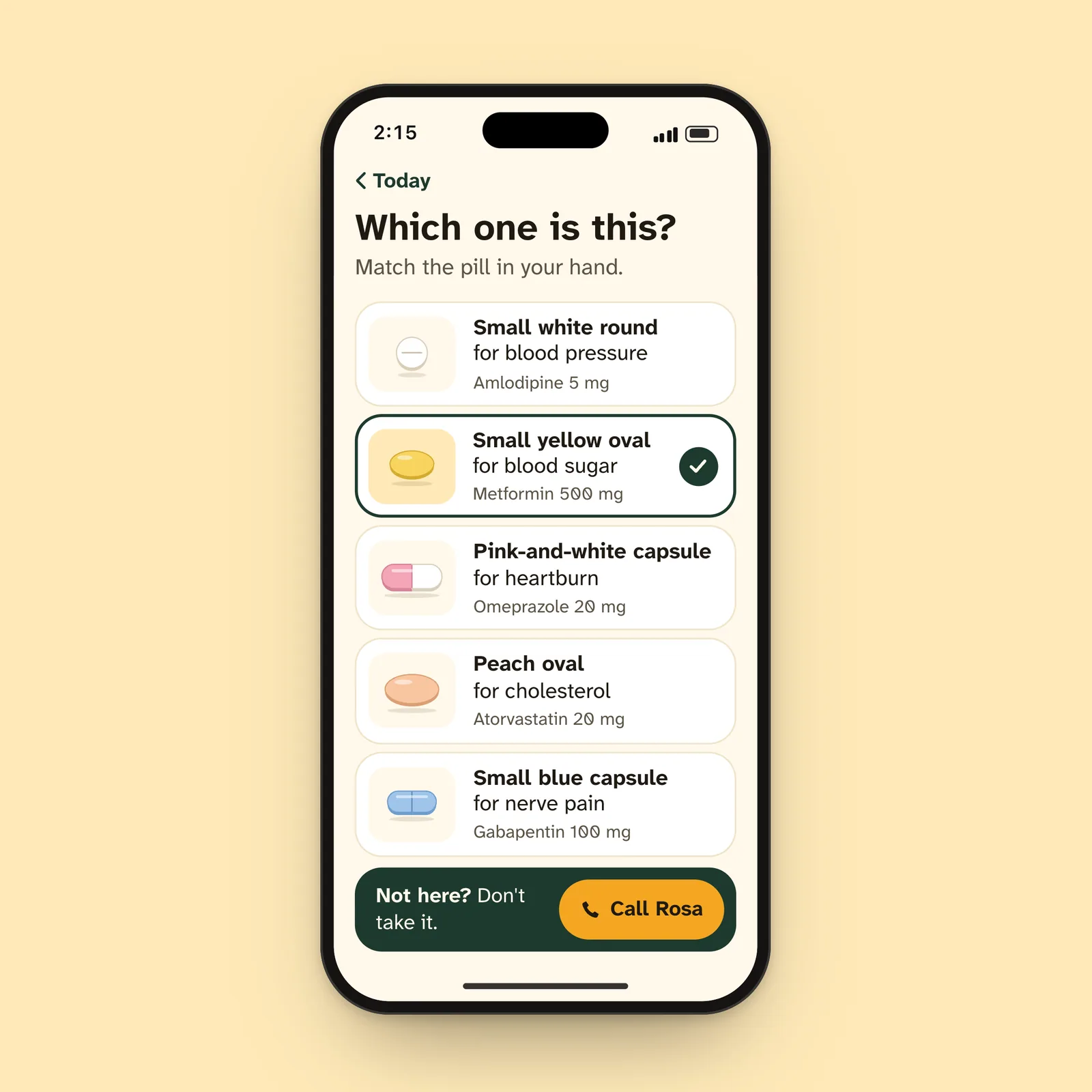
People know their pills by sight, not by name. Each one is drawn from its color and shape, with a plain purpose underneath, “small yellow oval, for blood sugar,” and the drug name comes second in smaller type. We tried photos first and dropped them: taken in dim kitchens, every pill came out beige.
- 3
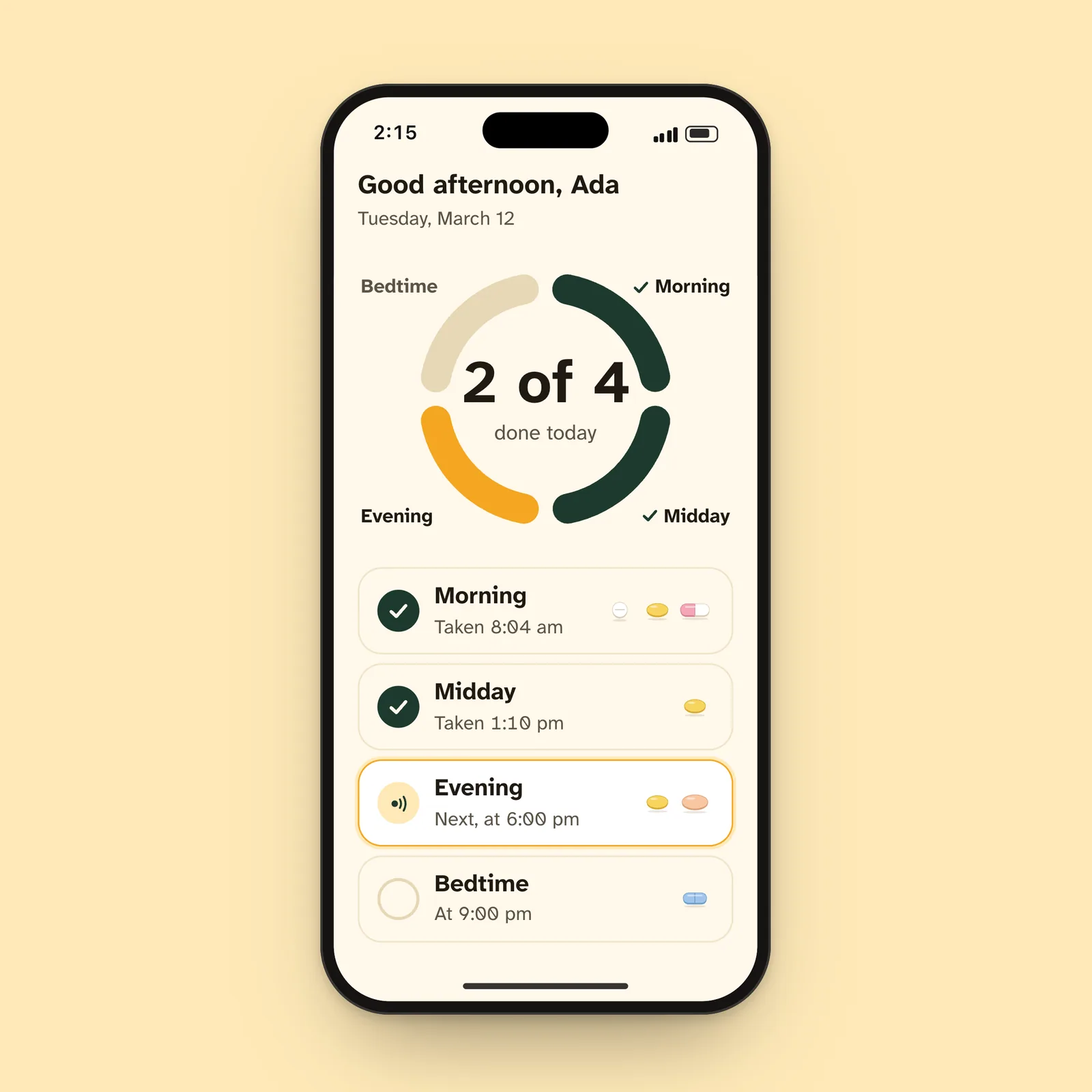
A day you can see at a glance
Double doses come from one question: did I already take it? A ring of four times, morning, midday, evening and bedtime, answers it from across the room. Tap any part and it shows which pills that was and when they were taken.
- 4
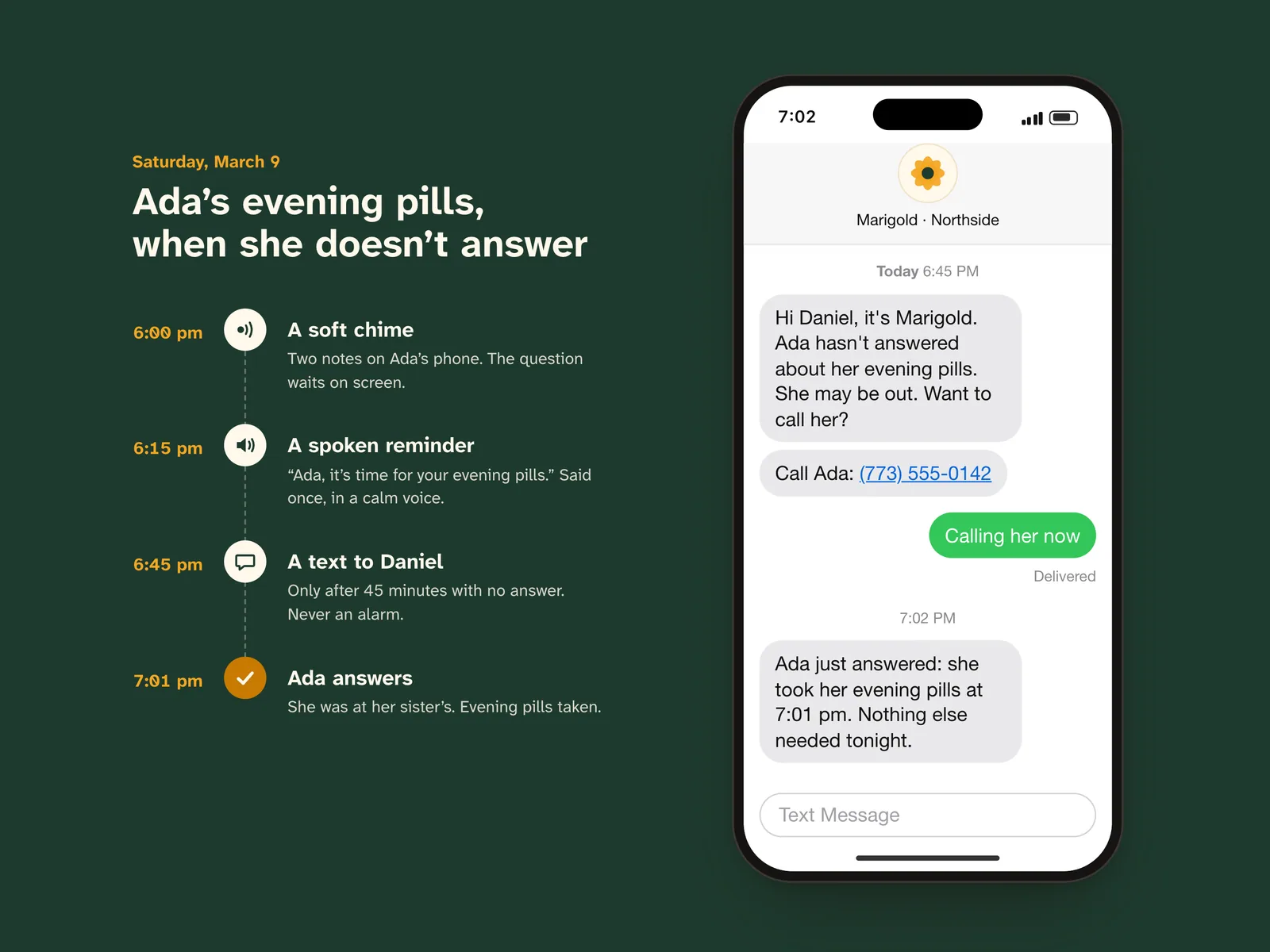
Gentle escalation, never an alarm
With no answer, Marigold plays a soft chime, says the reminder out loud after 15 minutes, and texts a family member after 45. There are no streaks and no red anywhere. The 45 minutes was set with Dr. Reyes: long enough for a walk to the mailbox, short enough for family to help before the next meal.
Good morning, Ada
Tuesday, March 12
Done for this morning.
- Amlodipine
- Metformin
- Omeprazole
Next1 pill at 1:00 pm
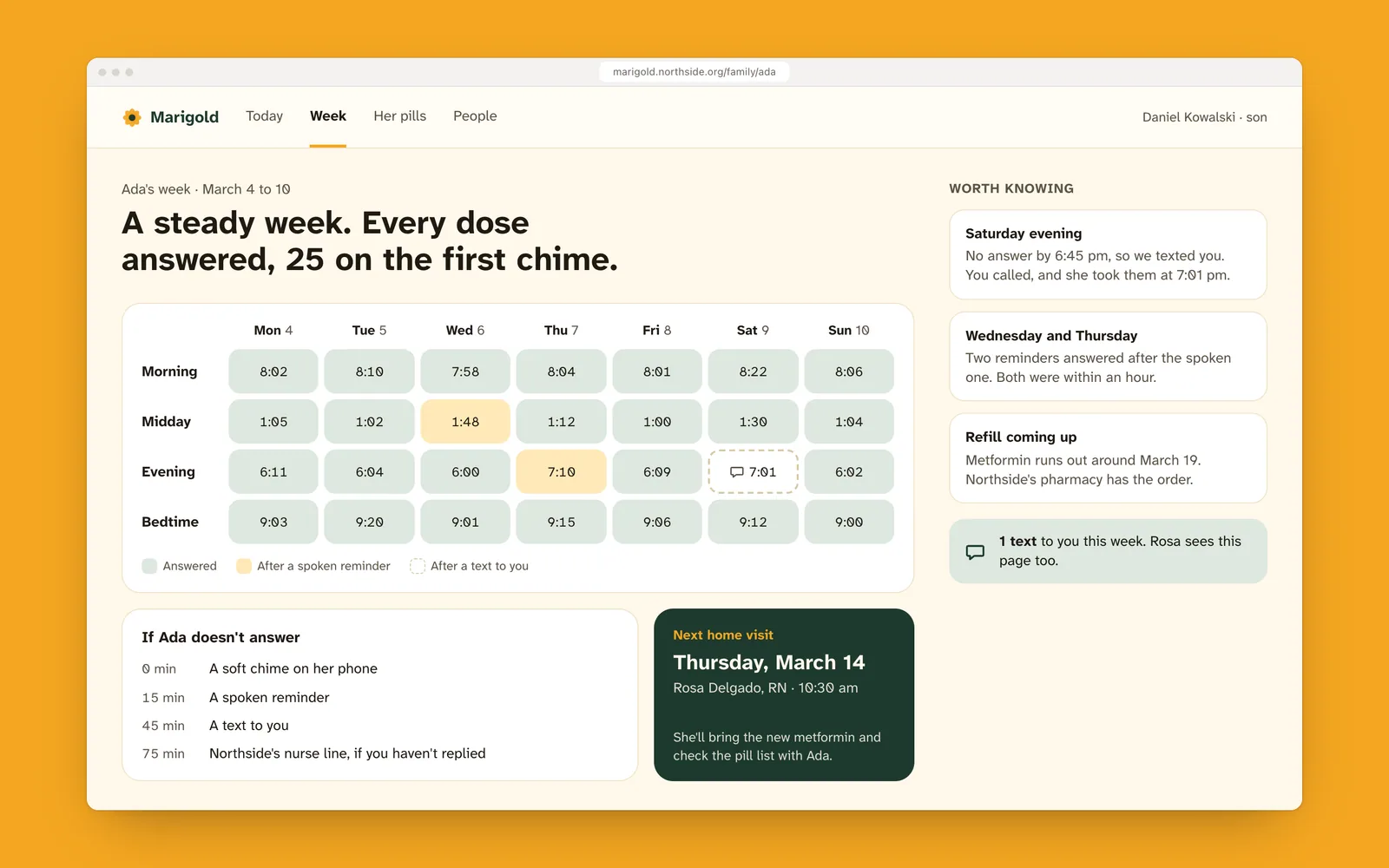
What Daniel, her son, sees
Ada today
1 of 4 done
Ada took her morning pills
8:04 am
Nothing for you to do.
Why the alarms got switched off
I spent the first three weeks on home visits with Northside's nurses, mostly in kitchens. Twenty-two people showed me how they take their pills, where they keep them, and what they had done with the alarms.
The alarms weren't failing because people forgot to set them. They failed because they felt like being scolded three times a day, in tiny type, by something that couldn't tell whether you had already taken your pills. So the question was never how to be louder. It was how to be worth answering.
“It doesn't yell at me. It asks.”
- home visits before any screens
- 22home visits before any screens
- pilot participants
- 64pilot participants
- weeks in the pilot
- 10weeks in the pilot
- ages, median 81
- 72–94ages, median 81
Outcome
We ran a 10-week pilot with 64 Northside participants. On-time doses went from 71% to 88%, and reported double doses went from nine to none. At week 10, 92% were still answering their reminders. With the pill-box alarms, about 40% had kept them on. Caregivers got about 1.3 texts a week, which most of them told us felt about right.
- doses taken on time
- 71% → 88%doses taken on timeWithin an hour of the scheduled time. Baseline from nurse pill counts over two weeks; pilot from the app log.
- reported double doses
- 9 → 0reported double dosesReported at home visits in the 10 weeks before the pilot and the 10 weeks of it.
- still using it at week 10
- 92%still using it at week 10Answered at least one reminder a day in week 10. About 40% had kept the old alarms on.
- caregiver texts a week
- 1.3caregiver texts a weekAverage per participant across the pilot.